
Reservoir Raises $8M to Expand Predictive Water Heating Beyond Boston

Reservoir’s mission is to make home electrification easy, affordable, and awesome, starting with home hot water. We’ve installed super-smart, super-efficient water heaters in nearly 100 homes in the Boston area so far and are excited to expand our footprint here and in new cities.
To fuel that growth, we have raised an $8 million seed round, led by Asymmetric Capital Partners, and joined by Founder Collective, which led our pre-seed round in 2024, and MCJ.
“Everyone is chasing AI, but we see giant opportunities in overlooked places like plumbing and home services. Reservoir is meeting people's everyday needs with robust technology and great service.”
Rob Biederman
Managing Partner, ACP
The problem with the water heater in your basement
Water heating is the second-largest source of energy use in the average home. A typical water heater consumes more energy over a year than an electric car.
It's also a common source of damage: 24% of home insurance claims are tied to water, much of it from failing tanks, frozen pipes, or leaks that go unnoticed until they're catastrophic.
Reservoir's predictive water heater is built to address both problems at once. It anticipates hot water demand instead of running on a fixed schedule, which reduces wasted energy, and it monitors for the conditions that lead to leaks, frozen pipes, fumes, and bacteria growth, so it can protect the home rather than just heat water in it.
Traction so far
Reservoirs in nearly 100 homes
We began installations in late 2025 and have since installed nearly 100 units across the Boston metro area, heating 500,000 gallons of water since January.
Fully installed for under $4,000
Reservoir is Boston’s most affordable water heater when accounting for equipment, installation, and fuel. That's a direct result of designing, building, and installing our own units rather than relying on third-party manufacturing or subcontracted installation. Upfront costs are comparable to a traditional system, installation is included rather than billed separately, and state and regional rebates and 0% financing reduce the cost further for most homeowners. Once installed, Reservoir can lower annual energy bills by up to $800 compared to a traditional tank.
“We can offer more affordable pricing than traditional water heaters because we design, build, and install them ourselves. We can move faster and make better decisions because our team has experience both in the trades and in smart hardware and plumbing technology.”
Luke Winston-Almanzar
Co-founder and CEO, Reservoir
4.9 star customer rating
We’re proud to have a 4.9-star rating on Google, with glowing reviews for both the product and our install team. We take seriously the responsibility of coming into your home and making sure your family has fast, efficient, safe hot water.
What’s next
Upgrade more homes to predictive water heating
This funding round will go toward getting Reservoirs into more homes, both across the Boston metro area and in new cities beyond New England. Every additional install gives us more data on how the product performs across different homes, climates, and usage patterns, which in turn lets us keep refining the prediction model that sets Reservoir apart from a standard tank.
Address the plumbing labor shortage
The trades are facing a significant labor gap: only two new workers enter the field for every five who retire, and the average master plumber is nearly 60 years old. Reservoir is working to make the trade more attractive to new workers by training apprentices on smart hardware and software from the outset and giving them substantive, hands-on installation experience earlier in their careers.
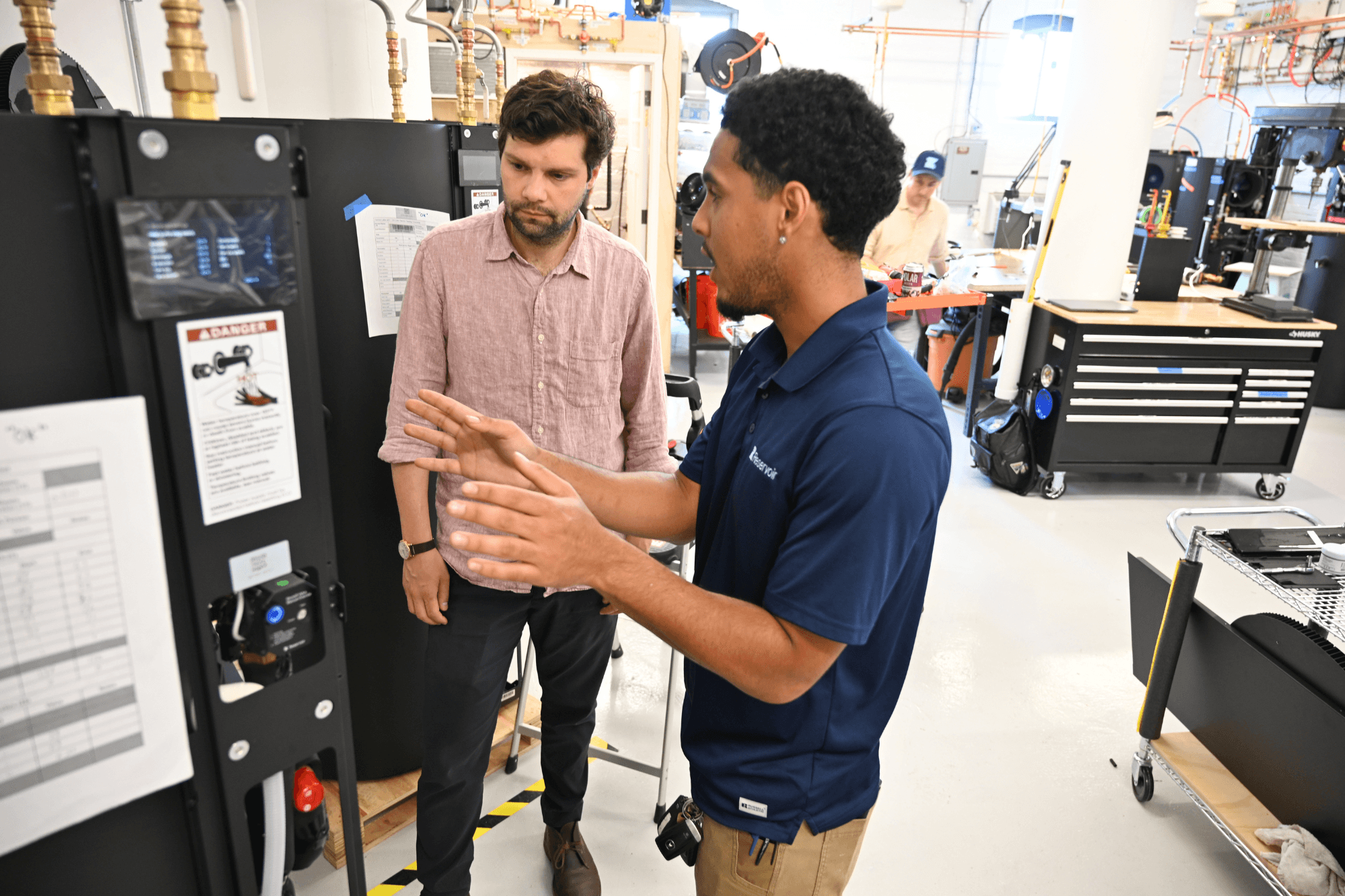
In our office, master tradespeople and Harvard grads learn from each other about plumbing, tech, and AI.
Balance the electric grid
There are roughly 120 million water heaters installed in U.S. homes today. At scale, these represent a potential 6-billion-gallon, grid-connected thermal battery. Reservoir can heat water when solar output is highest or electricity is cheapest, and store that heat for use throughout the day. Deployed broadly, this behavior could help utilities absorb excess renewable energy that would otherwise be curtailed.
Keep in touch
Sign up for our newsletter to keep in touch with us during this next chapter, and if you’re looking to upgrade your water heater, take our Virtual Assessment and a member of the team will get back to you.