
Reimagine Your Water Heater with Reservoir

Rethinking Domestic Hot Water
Originally published by Jay Fox at Passive House Accelerator
Domestic hot water (DHW) has long been one of the thorniest issues in all-electric and high-performance buildings, with solutions in all-electric DHW systems lagging behind those in other mechanical systems. Reservoir, a new startup based in Boston, is bringing much-needed advances to the world of DHW by using heat pump technology and industrial controls to make the smartest DHW systems on the market.
As Reservoir founder and CEO Luke Winston-Almanzar explained during a recent Component Spotlight held by the Accelerator, Reservoir is responding to the growing demand for electrified DHW systems and the paucity of reliable, all-electric options for owners and developers. “It’s not just about efficiency; it’s about better living,” he said.
Mind the Innovation Gap
DHW systems have long taken a backseat to other mechanical systems and enclosure strategies. Particularly in the world of high-performance and passive buildings, the focus has traditionally been on creating envelopes that are airtight, super-insulated, and thermal-bridge-free.
However, as buildings electrify and enclosure performance improves, DHW is increasingly responsible for a larger share of operational energy use, especially because innovation has slowed to a drip. While other systems have incorporated smart technologies that have evolved over several generations, Winston-Almanzar noted that most water heaters still rely on technologies that date back to the 1980s or before.
Consequently, hot water can often account for close to one-fifth of household energy consumption, making it one of the largest energy loads in many homes. As he noted during the event, he’s found new electric water heaters that are rated to use more energy (4,622 kWh) than an electric car in a year*.
“I find it crazy that I can talk to my watch, but something that uses so much energy operates on so little intelligence,” he said.
It is likely higher in high-performance homes because of the innovation gap between DHW and other mechanical systems. Conventional DHW systems, including many all-electric systems, do not respond dynamically to occupant behavior, utility pricing signals, or changing energy availability. The result is inefficiency, wasted energy, and performance compromises.
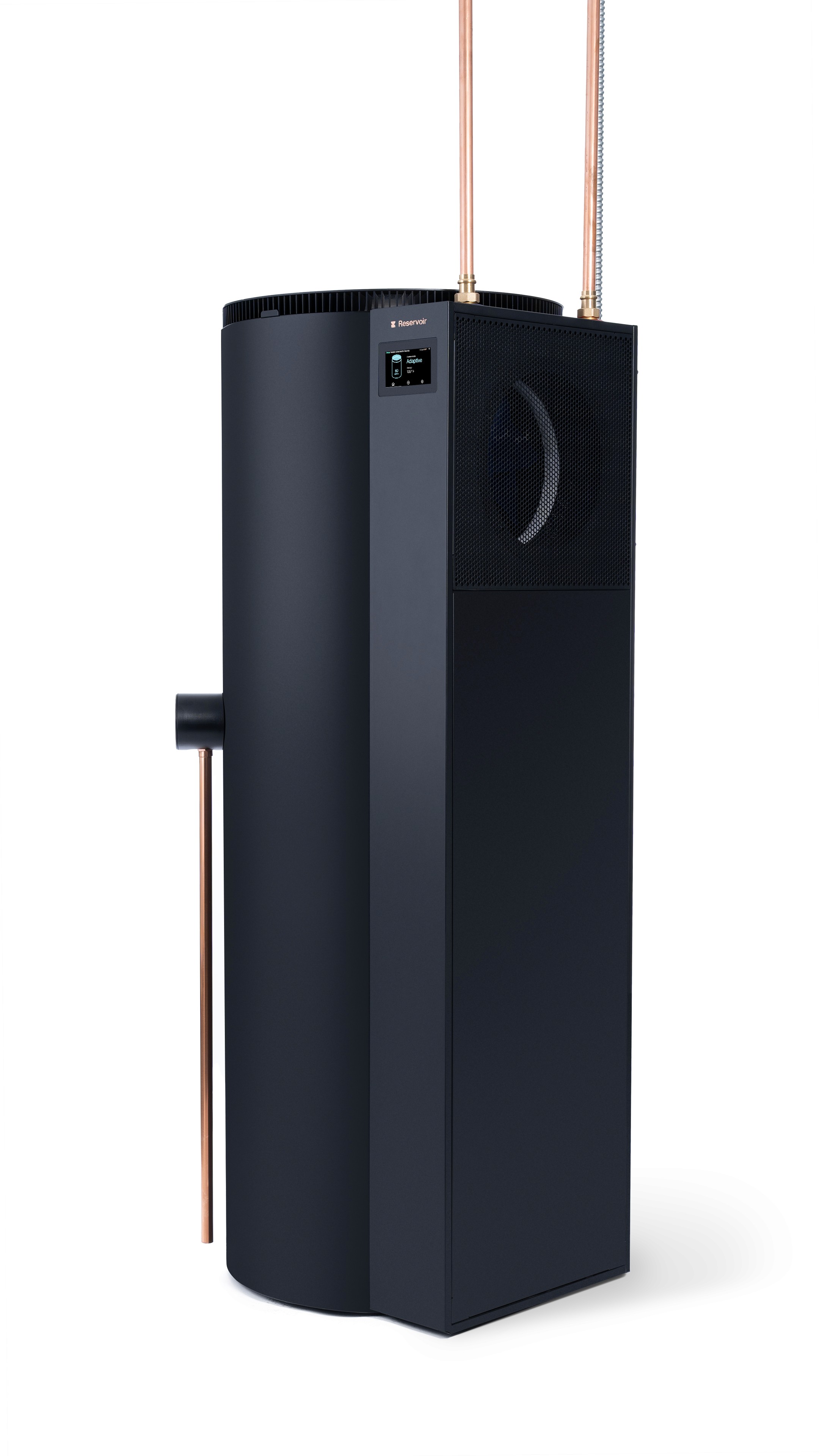
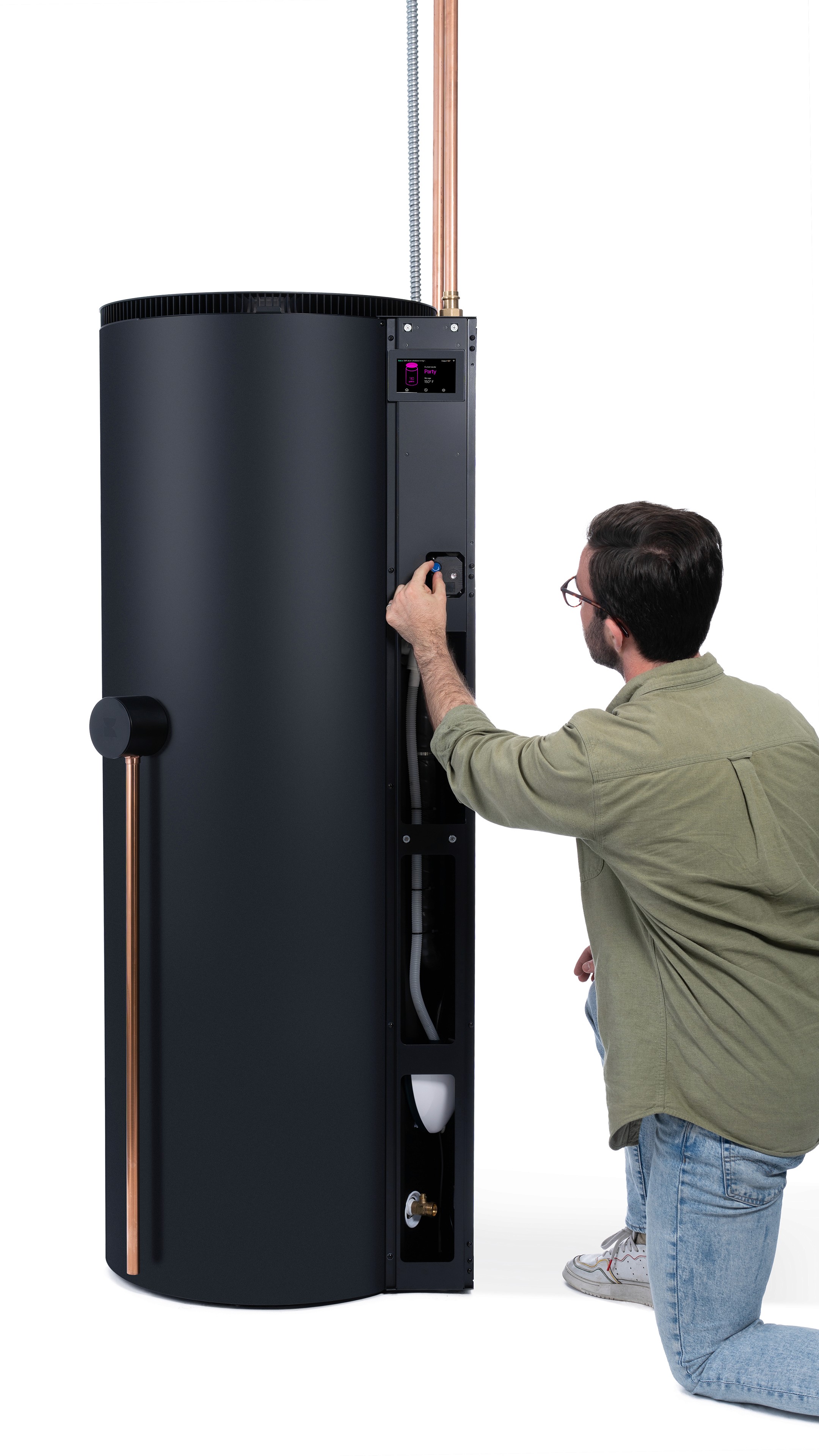
Intelligence Meets Heat Pump Technology
Reservoir’s approach begins with a simple premise: DHW systems should be treated as intelligent thermal assets rather than static appliances.
Reservoir offers not only a more intelligent water heater, but vastly improved efficiency, resiliency, and occupant experience. It also uses 80% less energy than a gas system and can produce savings of $8,000 over ten years when compared to standard electric DHW systems. They can currently install one of their water heaters in the Boston area for approximately $5,450, once state incentives are factored in.
At the core of Reservoir’s concept is the integration of advanced controls and machine learning with heat pump technology. Heat pump systems offer dramatically improved efficiency compared to resistance or gas systems. However, this technology historically can introduce potential constraints, including slow recovery times and operational complexity, into the equation. Some electric water heaters can take several hours to heat up their tanks.
Through innovating on heat pump water heaters, Reservoir aims to enhance the system through what Winston-Almanzar described as “thermal intelligence.” By learning occupant patterns and predicting demand, the system can optimize when and how heating occurs, maximizing efficiency while ensuring comfort.
The design integrates multiple components typically assembled separately in high-performance systems. These include recirculation capabilities, adaptive controls, and sensing and monitoring technologies that allow the system to balance efficiency with real-world usability. Additional features that are likely to turn heads include:
No-wait showers: Hot water is delivered to the faucet instantaneously.
Thermal intelligence: The 50-gallon tank can be virtually expanded to 150 gallons.
Home protection: Industrial controls monitor, alert, and auto shut-off in the event of leaks or frozen pipes, allowing owners to prevent damage to their property. The system can also kill legionella bacteria in the tank via smart self-clean.
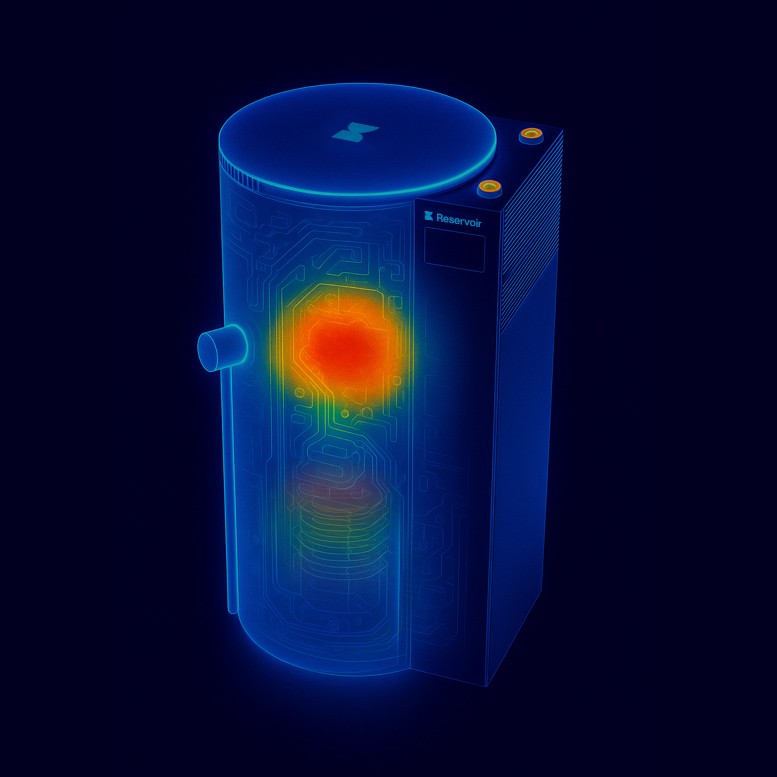
Reservoir uses Thermal Intelligence to heat water when electricity is cheaper and cleaner
Creating a Positive Feedback Loop
The goal is not simply efficiency, but enhanced user capability and a better overall experience. Moreover, Reservoir hopes to turn sustainable technology into something people genuinely want to adopt rather than something they feel obligated to install.
Following his presentation, Winston-Almanzar took part in an interactive session with over 180 Passive House enthusiasts and covered how Reservoir’s smart systems are redefining expectations for DHW performance, as well as specific challenges around peak demand, storage, controls, reliability, and integration with broader building systems. You can listen to the entire exchange by checking out the video above.
“It was an honor to present to the Passive House community,” Winston-Almanzar wrote after the event. “Few venues have as many passionate builders offering earnest comments, questions, and suggestions about an innovative new product like Reservoir. I obviously enjoyed the positive encouragement, and I especially appreciate the informed and constructive push on what it takes to make a home the best it can be. We’re looking forward to working together more!”
Watch the full component spotlight here.